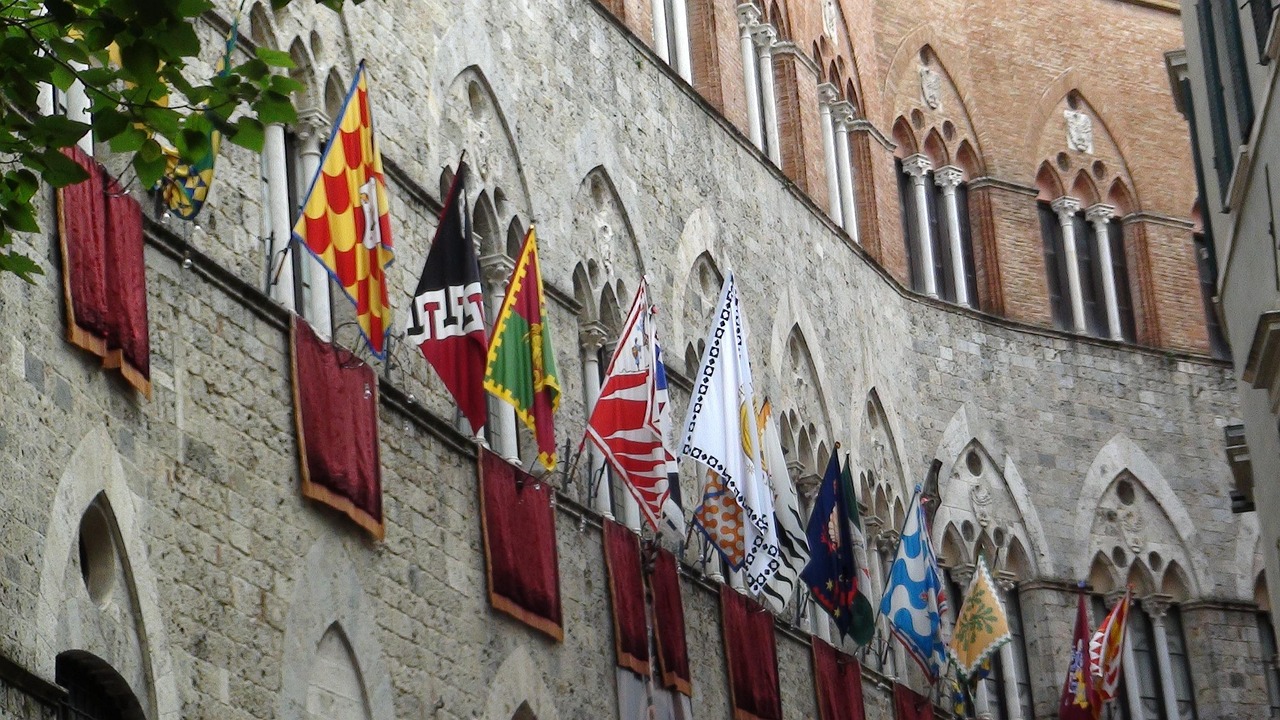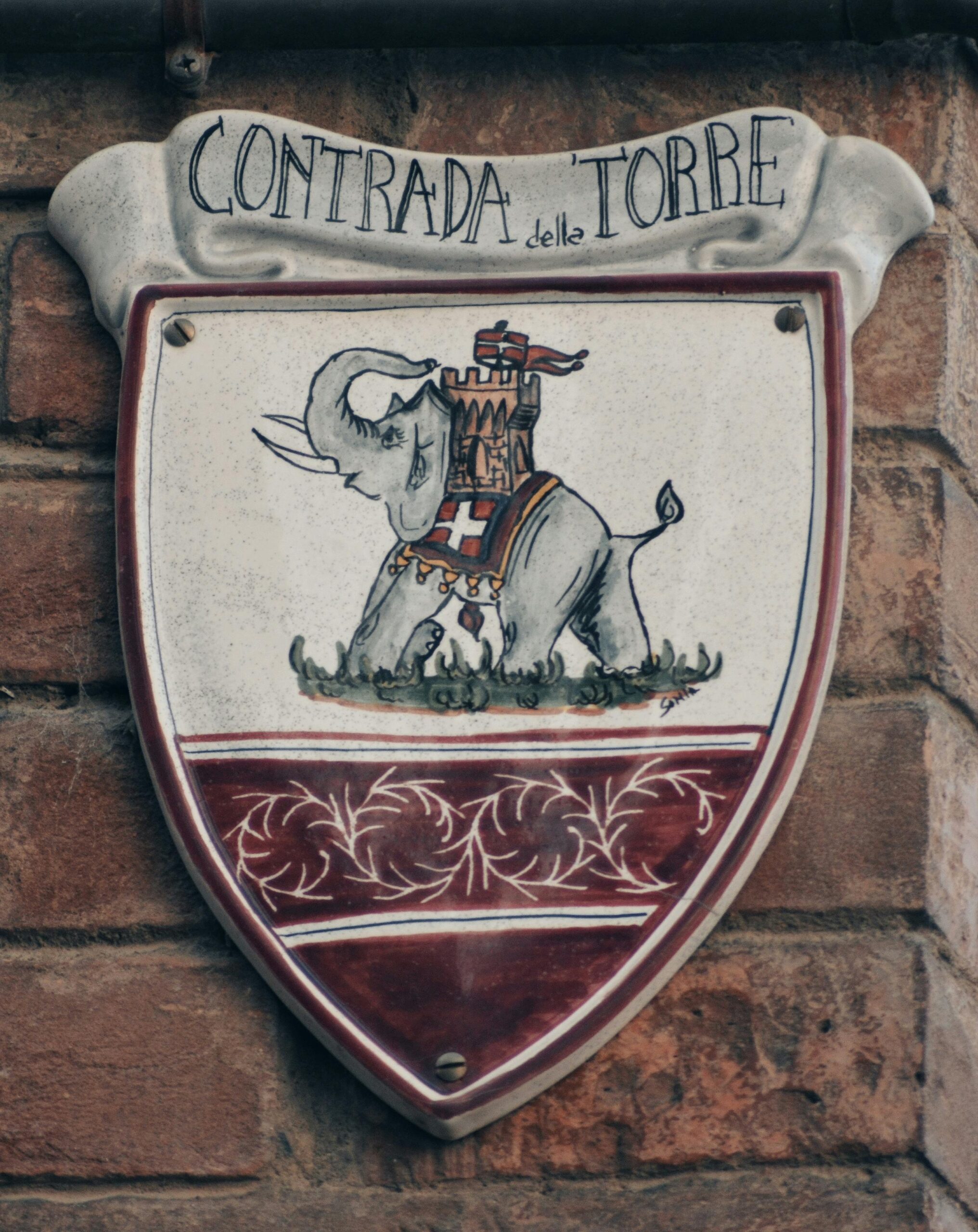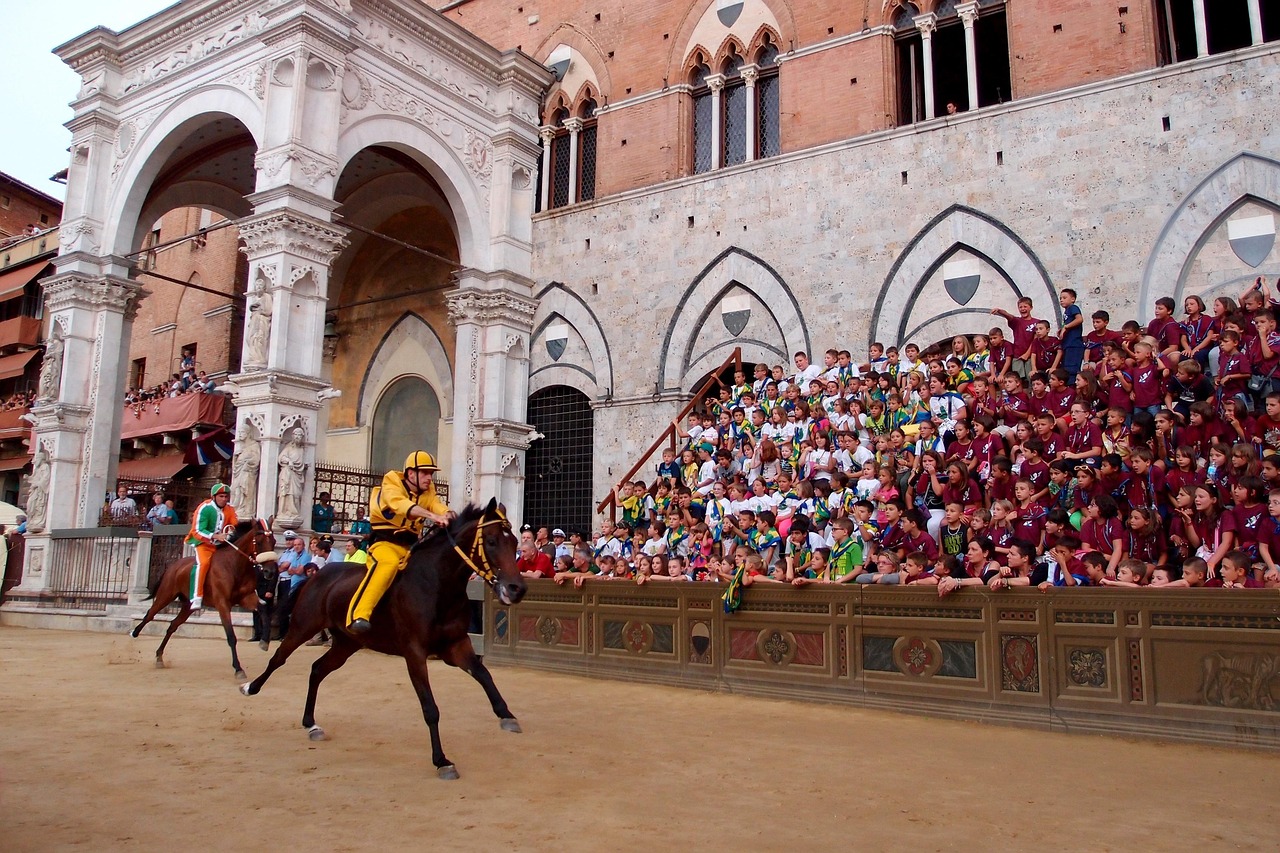
On the surface, the Palio is just a horse race. In reality, the 90 seconds when horses representing the contrade (districts) run three times around Piazza del Campo are only the tip of the iceberg.
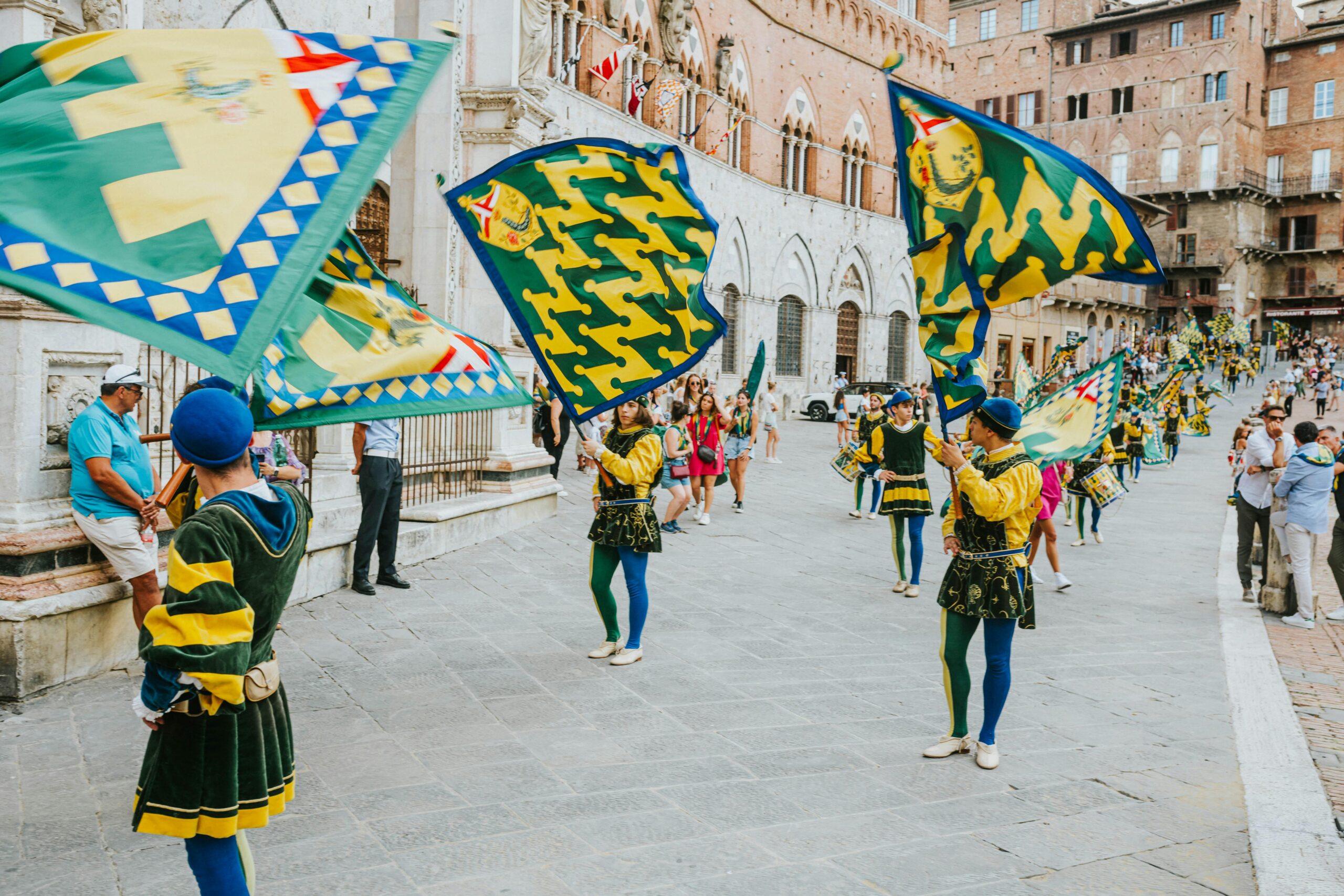
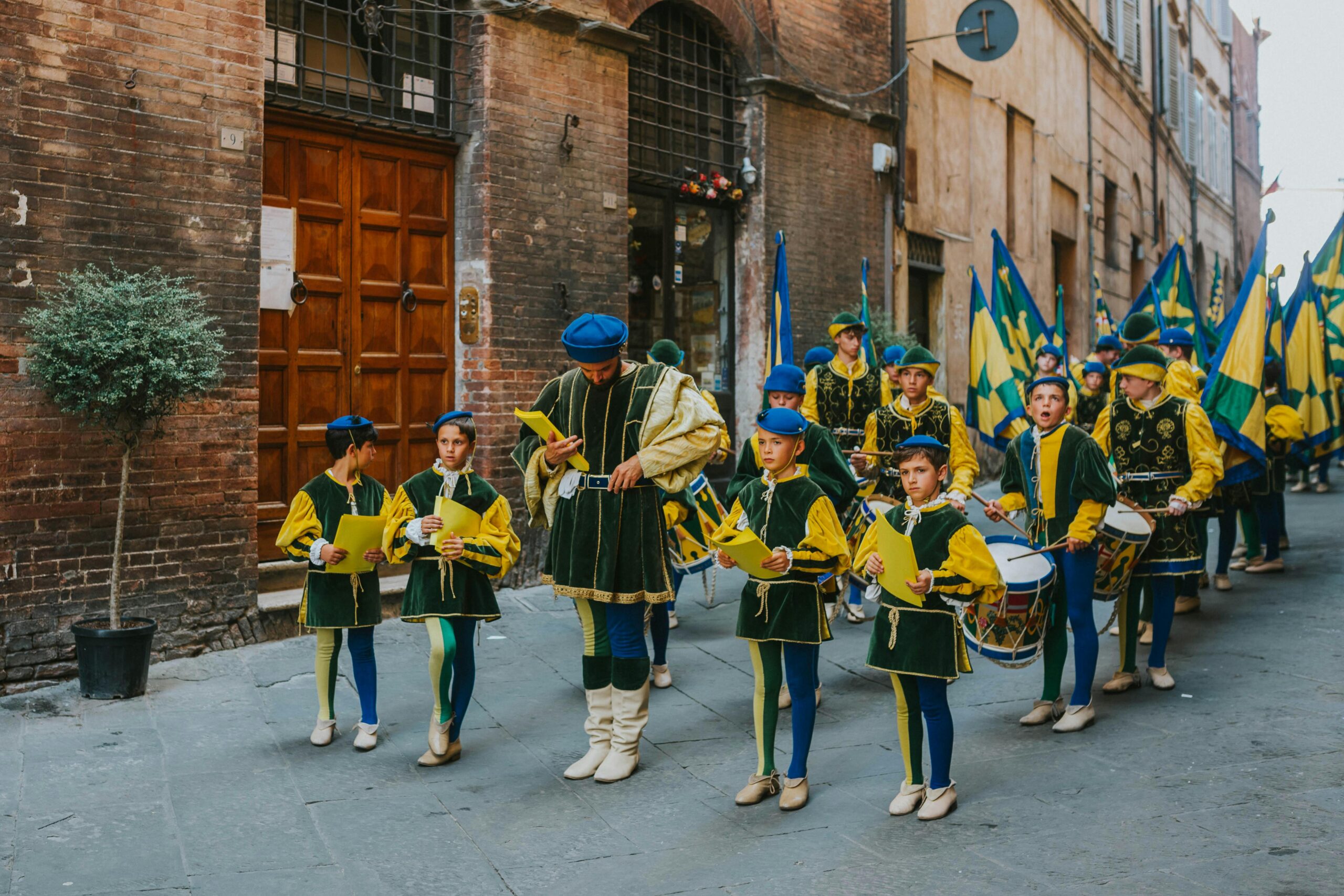
In full, the Palio is a cycle of rituals and emotions that consumes Siena for weeks. It begins with the lottery that assigns horses to the contrade—a moment of fortune and drama that can spark joy or despair. Each horse is then blessed in its contrada’s church, where the priest ends with the words: “Go and return a winner.” In the days leading up to the race, the city comes alive with parades, flag-throwing, drumming, and feasts, as centuries-old rivalries rise to the surface.
The race takes place twice a year, on July 2 and August 16. On race day, the historic Corteo Storico fills Piazza del Campo with medieval costumes and banners before the horses line up for three breathtaking laps. When victory is claimed—even by a riderless horse—the winning contrada erupts in celebration. The prize, a hand-painted silk banner called the Drappellone, is carried through the streets in triumph, followed by nights of singing and banquets. For the losers, especially those facing their ancient rivals, the sting can last for years.
The Palio’s origins go back to medieval times, when public games and contests were held on feast days. By the 16th century, it had taken the form we know today: not just a race, but a fierce competition of honor, identity, and community pride.