Grapes & Wines
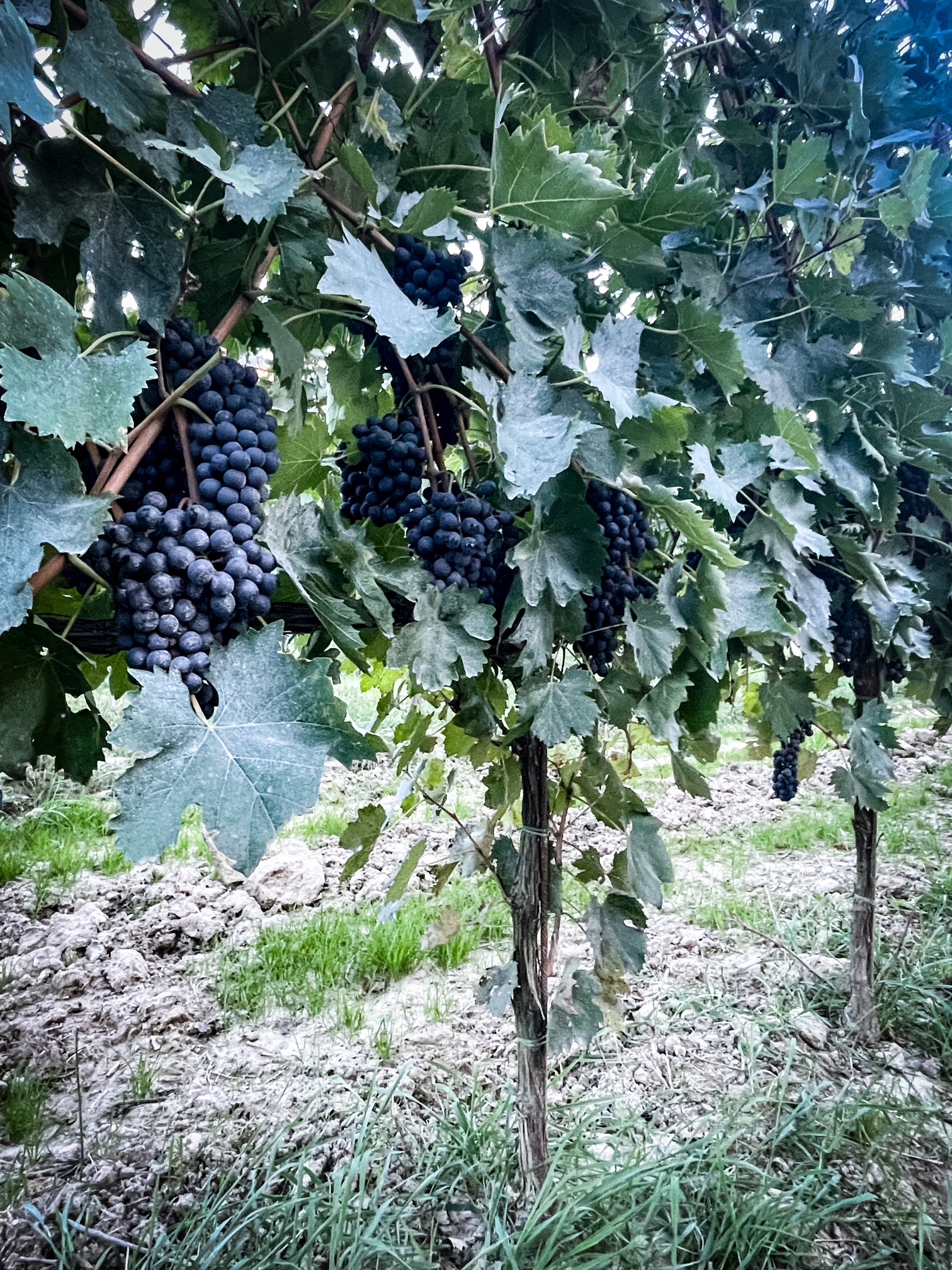
Like other Tuscan wine regions, red wine production in Montepulciano is primarily based on Sangiovese grape—in this case, the Prugnolo Gentile clone. Unlike Brunello, however, Vino Nobile di Montepulciano is typically a blend, with a minimum of 70% Sangiovese. Traditional Tuscan grapes such as Canaiolo, Mammolo, and Colorino are commonly added, though some producers also use international varieties like Merlot or Cabernet.
To be labeled Vino Nobile di Montepulciano, the wine must come from approved vineyards and age for at least two years. Producers may also craft a Riserva, aged for a minimum of three years, to showcase the best expression of terroir and winemaking skill. While the wines can be enjoyed upon release, they are also well-suited for aging up to 15–20 years—the owners themselves rarely open a bottle before its fifth year.
The region also produces a “younger brother,” Rosso di Montepulciano, a fresher, fruitier wine ready to drink upon release after a minimum of 16 months of aging.
Today, the Montepulciano area is home to about 80 wineries, producing roughly 9–10 million bottles of Vino Nobile and Rosso di Montepulciano each year.
Terroir & Style
The Vino Nobile di Montepulciano DOCG and Rosso di Montepulciano DOC appellations cover about 1,300 hectares (3,000 acres) of vineyards. Elevations range from 250 to 600 meters: higher, cooler sites produce elegant, aromatic wines, while warmer, lower slopes yield richer, more structured styles. The soils are varied—clay, sand, and marl—adding further diversity to the wines.
History & Reputation
Winemaking around Montepulciano hill dates back to pre-Christian times, when the Etruscans inhabited caves in the area during the 7th–8th century BC. Montepulciano’s strategic position along key trading routes sustained viticulture through Roman and medieval times. The term Vino Nobile was documented as early as the 17th century, though the wine as we know it today is relatively recent, recognized as a DOC in 1966 and elevated to Italy’s very first DOCG in 1980.
Today, Vino Nobile is regarded as one of Italy’s finest wine regions, with about 65% of its production exported worldwide.
Where & How to Taste
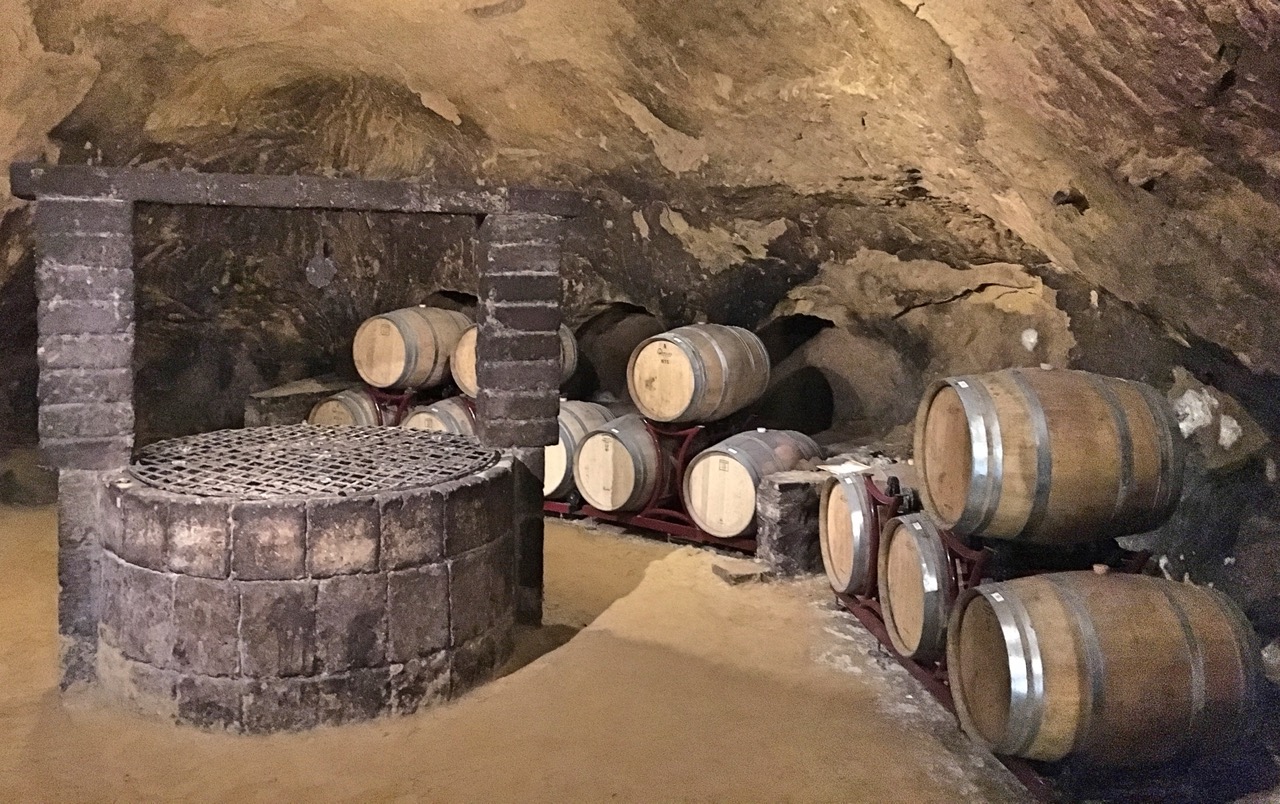
Montepulciano is perched on a ridge of alluvial sandstone (tuffo), a rock that has made it ideal for carving caves and cellars since Etruscan times. Walking through the town, one might not realize that beneath its streets lies a labyrinth of tunnels and chambers—perfect for storing and aging wine. Many producers still mature their wines here, while numerous enotecas have transformed these underground spaces into atmospheric settings for tastings.
Notable places in town:
- Bottega del Vino Nobile – This enoteca is where the owners first began their journey with Vino Nobile. Under the guidance of master sommelier Antonella, you can gain an excellent introduction to the appellation’s best wines. The tasting machines offer around 15–20 samples, but staff are happy to open other bottles if you are particularly interested in trying a specific wine. Worldwide shipping is available at very reasonable rates—especially if you mention you are Pavel’s guests.
- De Ricci – One of the oldest families producing Vino Nobile, with part of their aging cellar still located in the town center. And what a cellar it is! From the street, you descend ancient donkey-worn stairs nearly 30 meters below the surface into an underground “cathedral” of massive barrels, some 5–6 meters in diameter. At the far end, an original Etruscan cave—dating back almost 2,500 years—has been preserved. Tastings here, surrounded by history, carry a truly special atmosphere.
- Dei – A family-owned winery with a long tradition and a reputation for consistently high-quality wines, even in difficult vintages. Their Bossona Riserva is among the best of the appellation and, in blind tastings, often rivals top Brunellos of the same year.
- Boscarelli – A family-run winery that has gained acclaim in recent years thanks to high ratings from critics such as Parker and Wine Spectator. Visiting their simple tasting room is always a treat, but the most memorable experience was during harvest, watching the 80-year-old family patriarch personally oversee grape selection.
- Sanguineto – A hidden gem of the appellation, this winery rarely offers tastings or tours. It is run by two elderly women, one of whom helped plant the vines with her father when she was a young girl. The wines are consistently elegant, a reflection of their uncompromising dedication to quality—they prefer not to produce at all in particularly difficult years, such as in 2017. The Montelandi owners consider these wines among the top three Vino Nobiles in every vintage they have tasted since 2015.
- Bertille – Another women-run estate, founded by three sisters who trained as lawyers but discovered their true calling as winemakers. Their wines show remarkable skill, offering excellent value for money.
- Il Macchione – A family-run estate dedicated to crafting authentic, terroir-driven Vino Nobile using traditional methods and native yeast fermentation. Run by two brothers, this is Pavel’s favorite winery to visit. When Simone, one of the brothers, speaks about winemaking, every word conveys his passion and humble respect for the grapes.
Additional Activities
Explore underground wine cellars, stroll through the historic town center, or climb the town hall tower for spectacular views. Discover the town’s lively cultural scene, with music and theater events throughout the year—and if you’re here at the end of August, don’t miss the frenzy of the Bravìo delle Botti.