Grapes & Wines
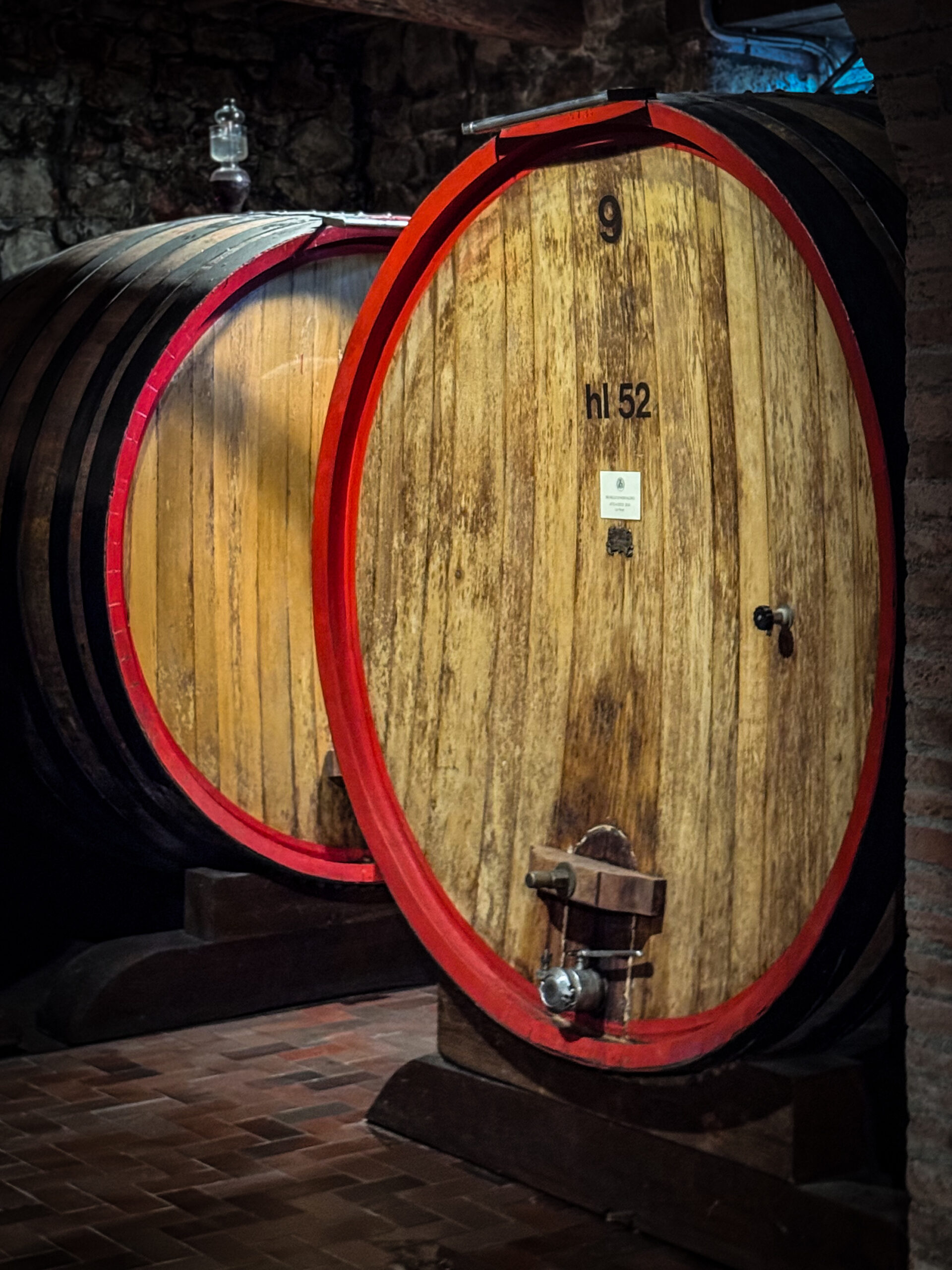
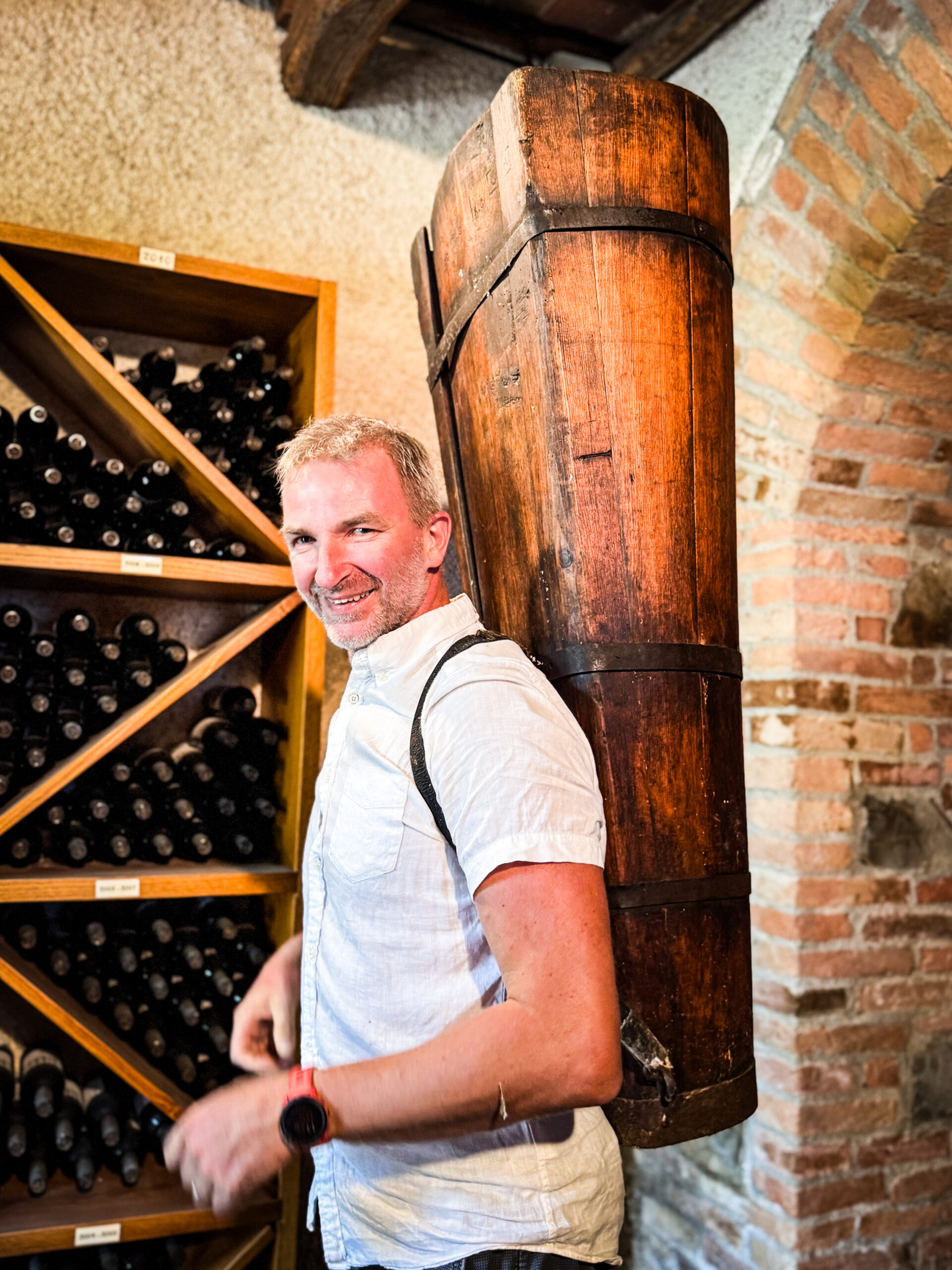
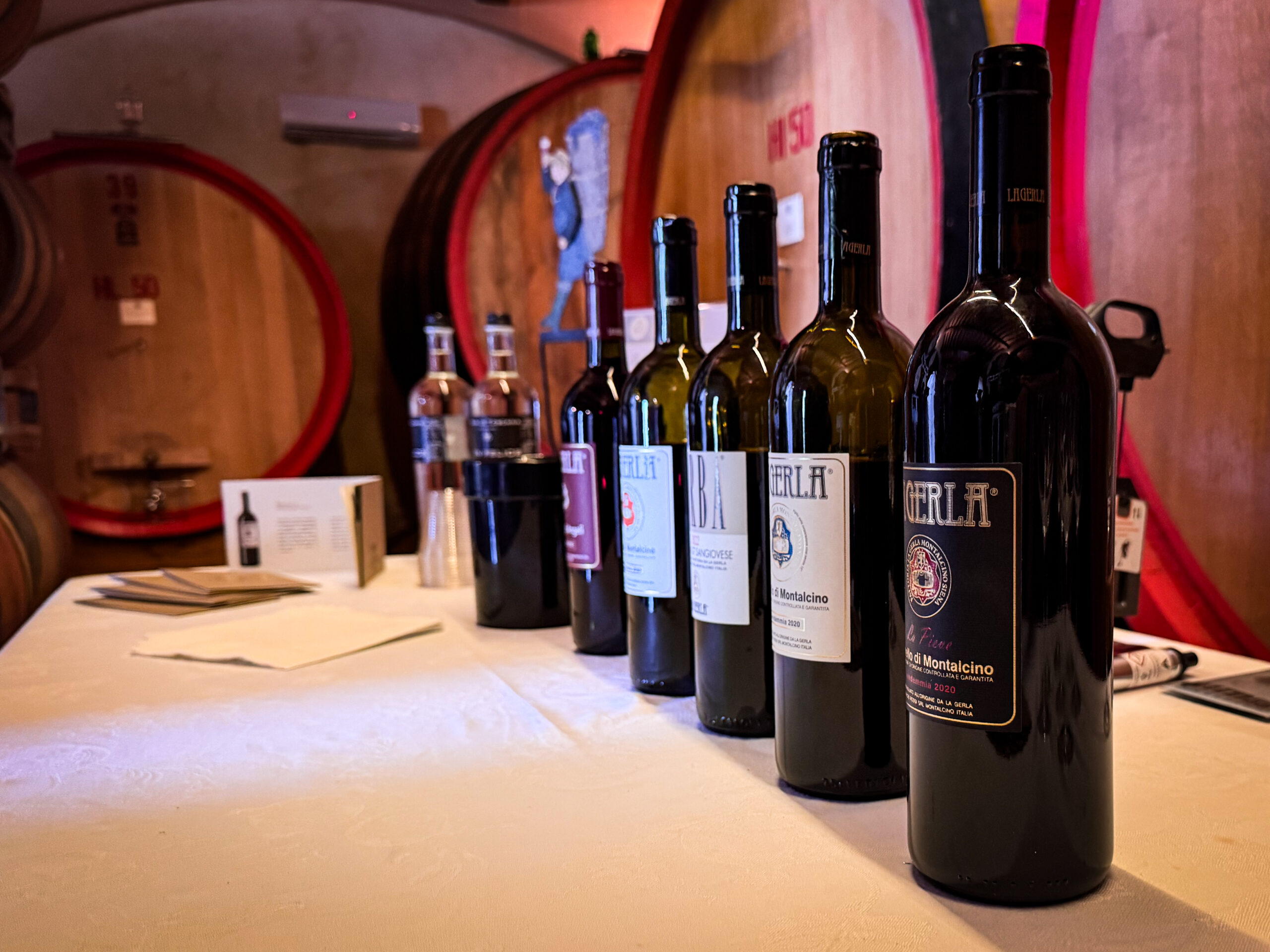
When we talk about Montalcino, the star designation is Brunello di Montalcino DOCG, produced exclusively from the Sangiovese Grosso grape. To be labeled Brunello, the wine must come from approved vineyards and age for a minimum of five years, including at least two years in oak barrels. For the best expression of terroir and winemaking skill, producers may craft a Riserva, which requires six years of aging. Each winery has its own “recipe” for Brunello, but in general these wines are renowned for their power, elegance, and longevity—often best enjoyed ten years after harvest.
Alongside Brunello, the region produces its “younger brother,” Rosso di Montalcino DOC. Also made from 100% Sangiovese Grosso grape, the Rosso is fresher, fruitier, and more approachable at a younger age, with a minimum of two years’ aging.
Montalcino’s annual production of about 15 million bottles is complemented by experimental reds, labeled either Sant’Antimo DOC or Toscana IGT. These are often blends based on Sangiovese, enriched with other varieties to create Bordeaux-style wines.
Terroir & Style
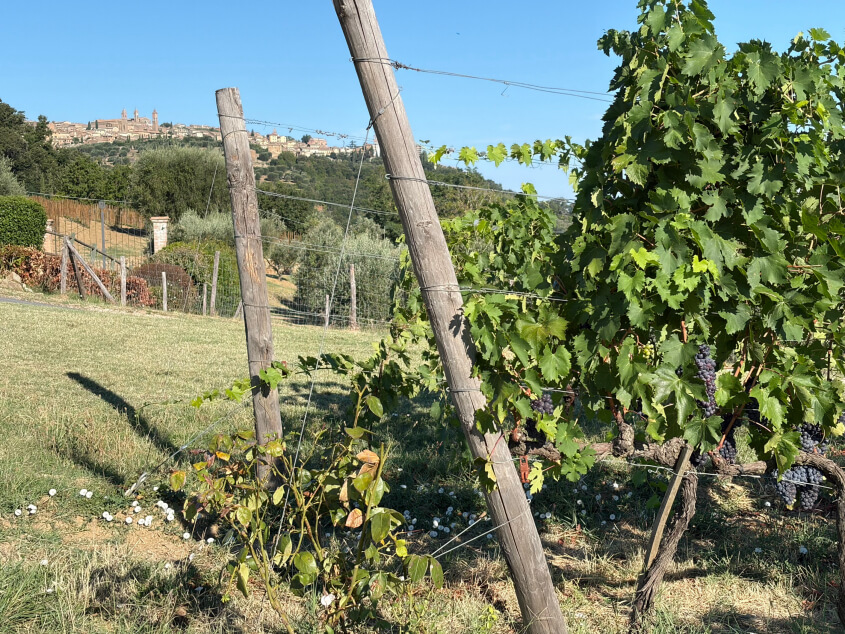
The Montalcino region covers about 3,500 hectares (8,650 acres) of vineyards, of which roughly two-thirds are registered for Brunello production. Elevations range from 120 to 650 meters: higher, cooler vineyards yield elegant, aromatic wines, while warmer lower slopes produce richer, more structured expressions. Soils vary widely—marl (galestro), limestone (alberese), clay, volcanic, and alluvial—explaining the remarkable diversity of Brunello styles, from graceful and perfumed to powerful and robust.
History & Reputation
Winegrowing around Montalcino dates back to the Middle Ages, when Benedictine monks cultivated the hills. Brunello’s modern reputation was built in the late 19th century by the Biondi-Santi family, who created the first Brunello and set the standard (that explains its prestige and price still today). The appellation was recognized as DOC in 1966 and elevated to DOCG in 1980. Today there are about 220 producers, 24 of whom founded the Consorzio del Brunello in 1967 to safeguard quality and promote the wine worldwide. With 70% of its production exported, Brunello di Montalcino is now considered one of Italy’s greatest, if not the greatest, wines.
Where & How to Taste
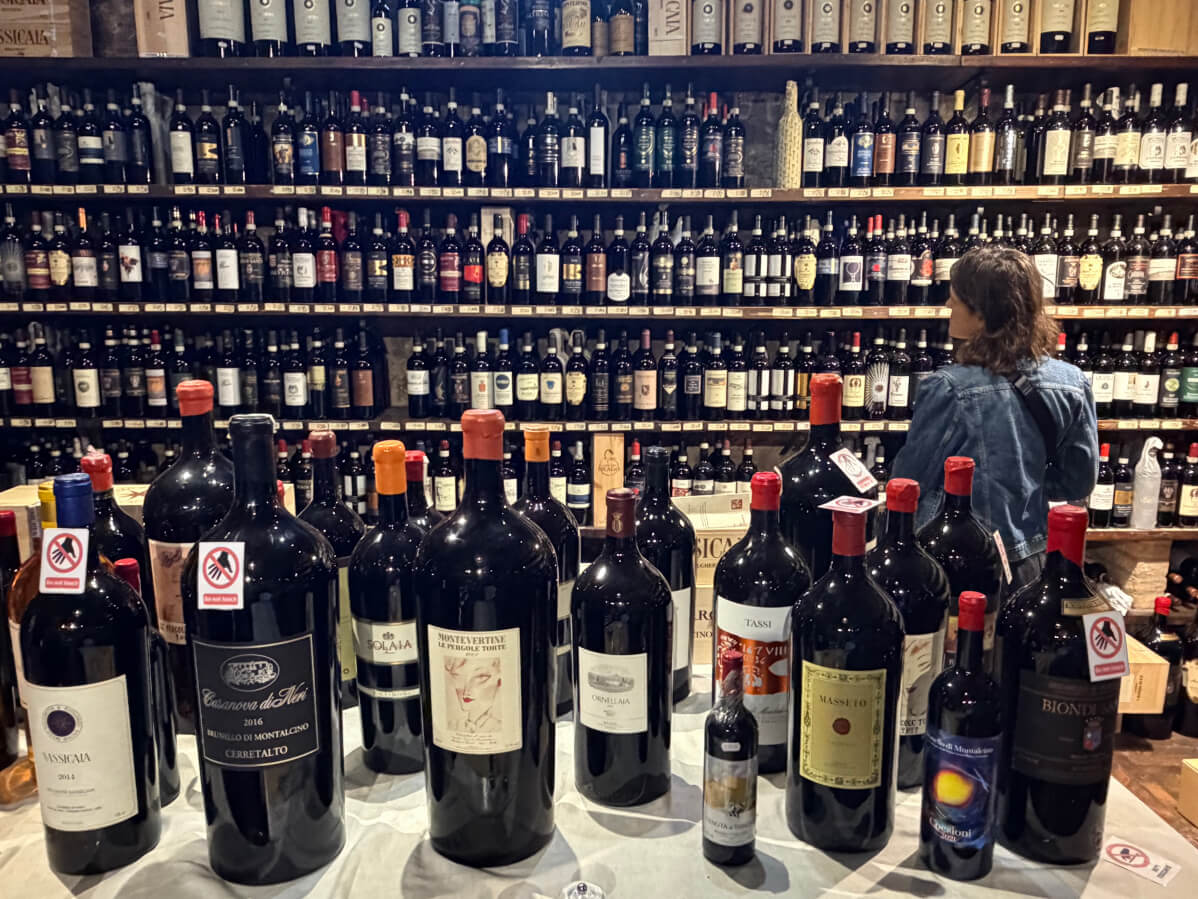
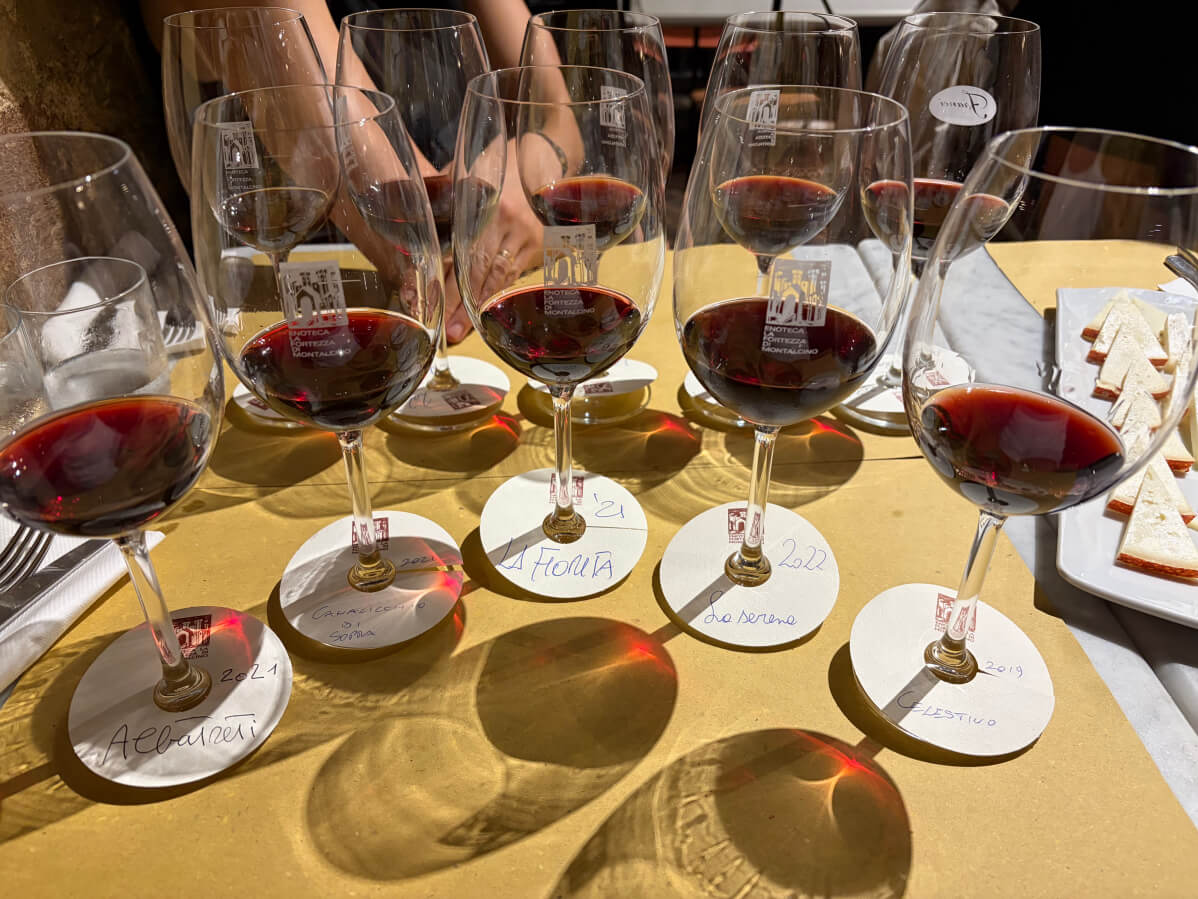
For a horizontal tasting of the latest vintage, with a wide selection of up to 100 wines, we suggest Enoteca di Piazza in the center of Montalcino. For true connoisseurs, we recommend visiting during Benvenuto Brunello, when the new vintage is officially introduced to the wine world. Let us know if you would like us to arrange it for you.
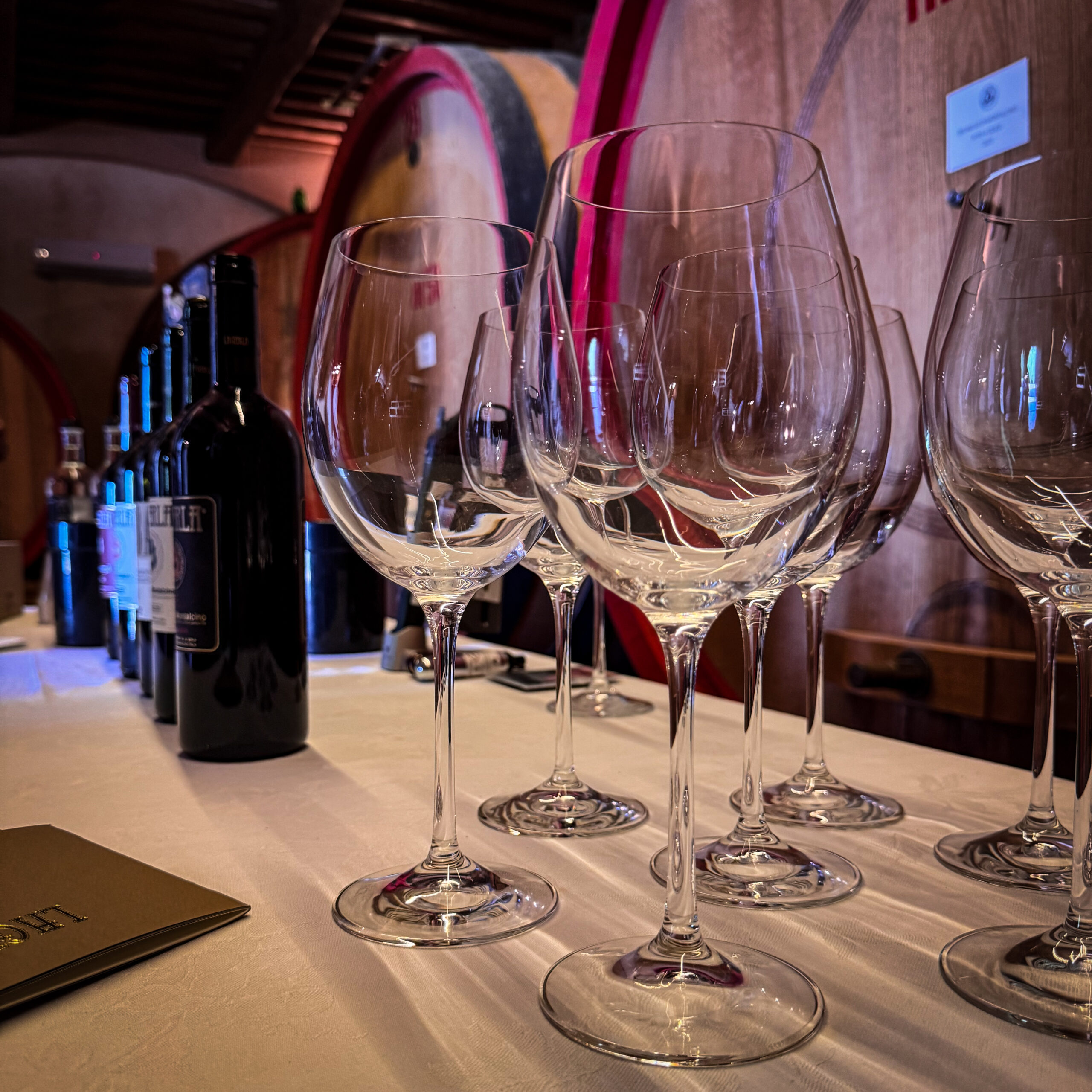
While we collaborate with around 30 wine producers (and can arrange tastings with many more), here are a few examples of what you can experience when visiting an estate.
- Poggio Rubino – A small estate with panoramic views stretching to the Tyrrhenian Sea. Tastings typically include 4–5 wines (2–3 Brunellos) paired with a multi-course lunch. Their wines are rarely found in trade, as the estate prefers selling directly to its loyal club of followers.
- Baricci and Uccelliera – Very small, family-run estates of about 10 hectares. Tastings are often hosted by the owners themselves (usually in Italian), offering an authentic connection to the terroir and winemaking process. Facilities are simple, but the Brunellos rank among the finest traditional wines of the region.
- Ciacci Piccolomini d’Aragona – One of Montelandi’s favorite (if not the favorite) for Brunello and Rosso. This historic estate, once owned by the Piccolomini papal family, was generously passed to farmer Giuseppe Bianchini and his family in the 1980s. With over 50 hectares on the southeastern slopes of the appellation, it now operates with modern winemaking facilities. Tastings are unpretentious, but the wines consistently deliver elegance and outstanding value—whether Rosso, Brunello, or the celebrated Riserva Pianrosso.
- Castello Tricerchi – The visit combines wine tasting with a guided tour of the castle and its historic cellars. Tastings take place in a former ballroom, a feast for the eyes as well as the palate. Occasionally, Tommaso—the owner—leads visits personally, showcasing wines that reflect the terroir of Montosoli hill. Full lunches are also available here.
- Casanova di Neri and Canalicchio di Sopra – Highly professional tastings, with the option to sample older vintages and pair wines with curated food experiences. Facilities and wines are state-of-the-art, acclaimed by wine connoisseurs worldwide.
Additional Activities
Enjoy the Wine & Jazz Festival in summer. Visit active medieval monasteries such as the Abbey of Sant’Antimo, Sant’Angelo in Colle, and Monte Oliveto Maggiore. Play a round of golf at La Bagnaia, one of Italy’s finest courses.