Between Legends, Art and Horses
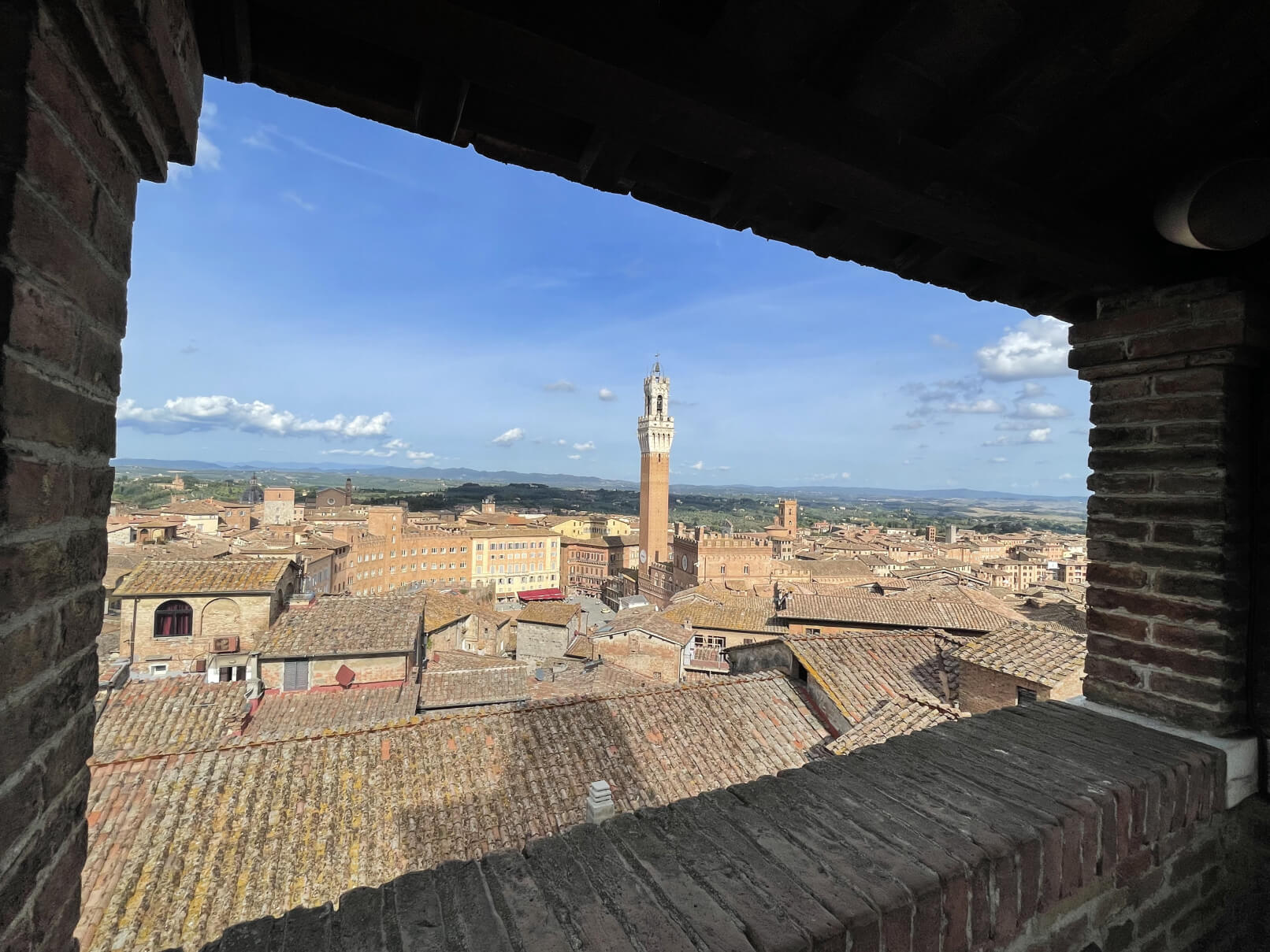
In the Tuscan context, Siena is a large city (about 50,000 inhabitants). Yet it preserves its medieval charm, enriched by the energy of the University of Siena’s students and the passion locals pour into the famous Palio horse race and the life of their contrade (districts).
According to legend, Siena was founded by the sons of Remus, Senius and Aschius, who fled Rome after their father was killed by Romulus. Riding a black horse and a white horse, they settled on these Tuscan hills, giving Siena its black-and-white emblem, the balzana, still seen on the city’s flag. The brothers also brought with them the She-Wolf of Rome, explaining why statues of the wolf nursing Romulus and Remus can be found throughout Siena.
Siena grew wealthy in the Middle Ages as a center of banking and trade, rivaling Florence in power and splendor. That rivalry left treasures still admired today: the stunning Piazza del Campo, the Duomo, and countless palaces, towers, and alleys that carry you back to its golden age (13th–14th centuries).
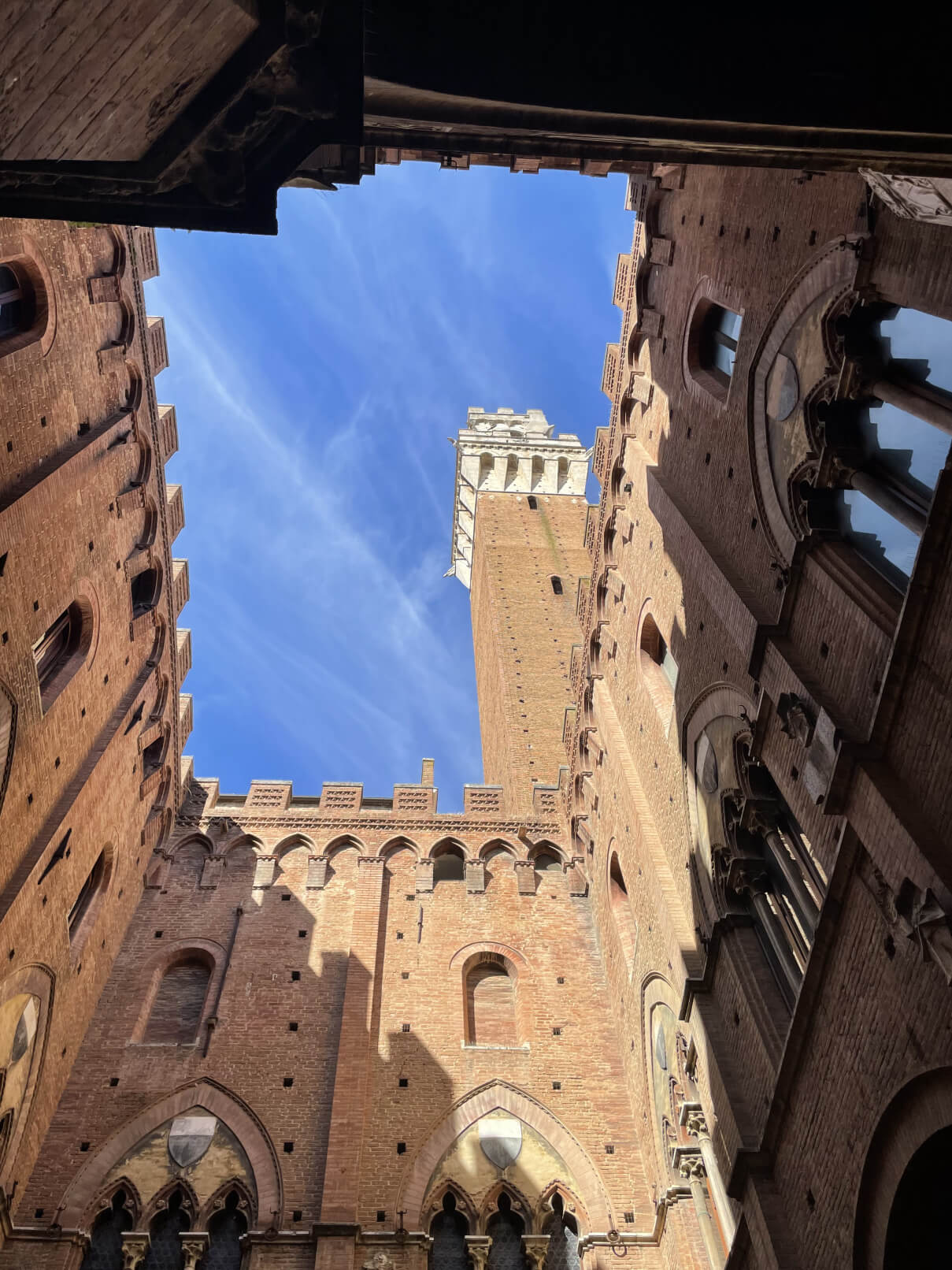
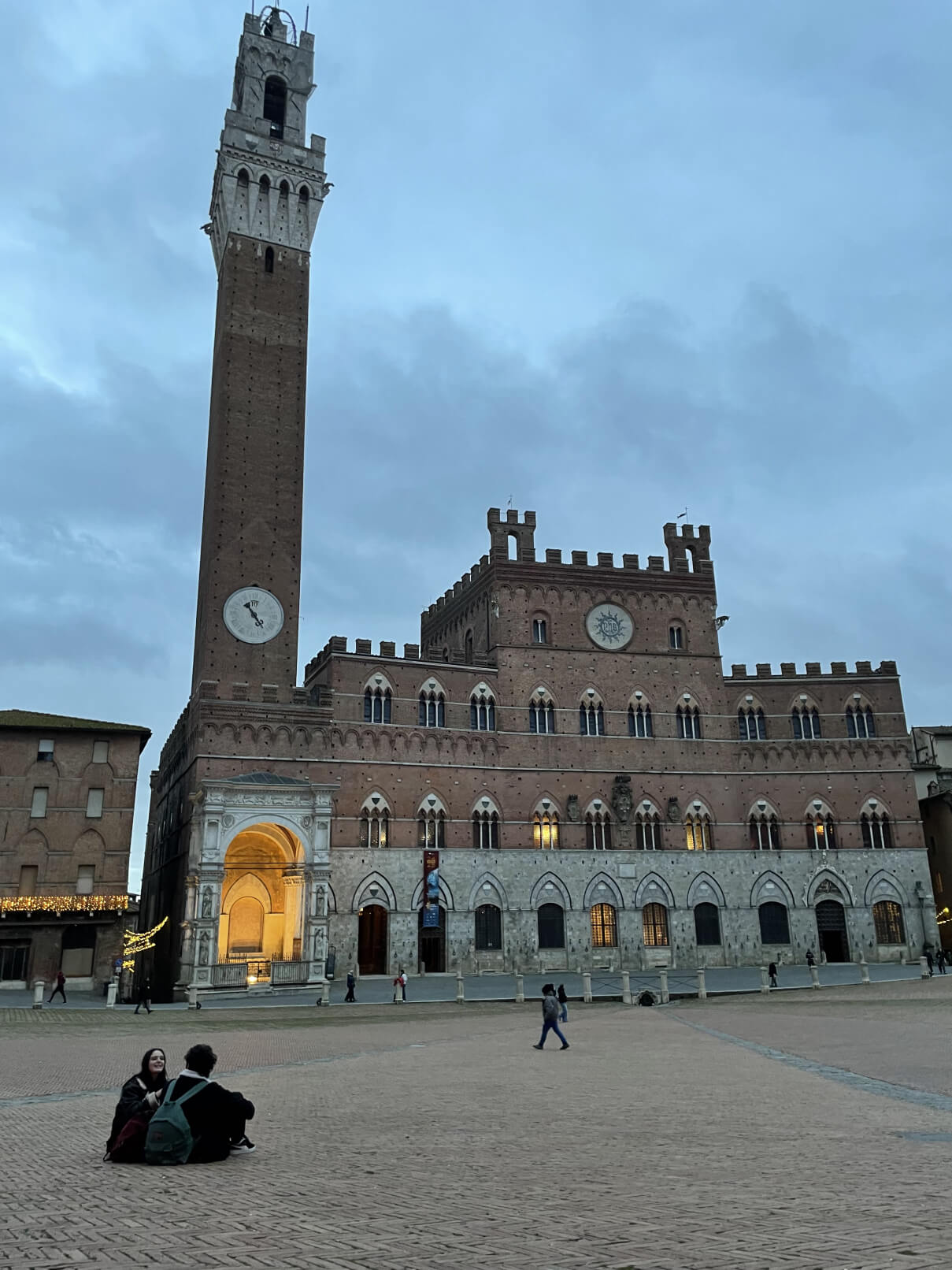
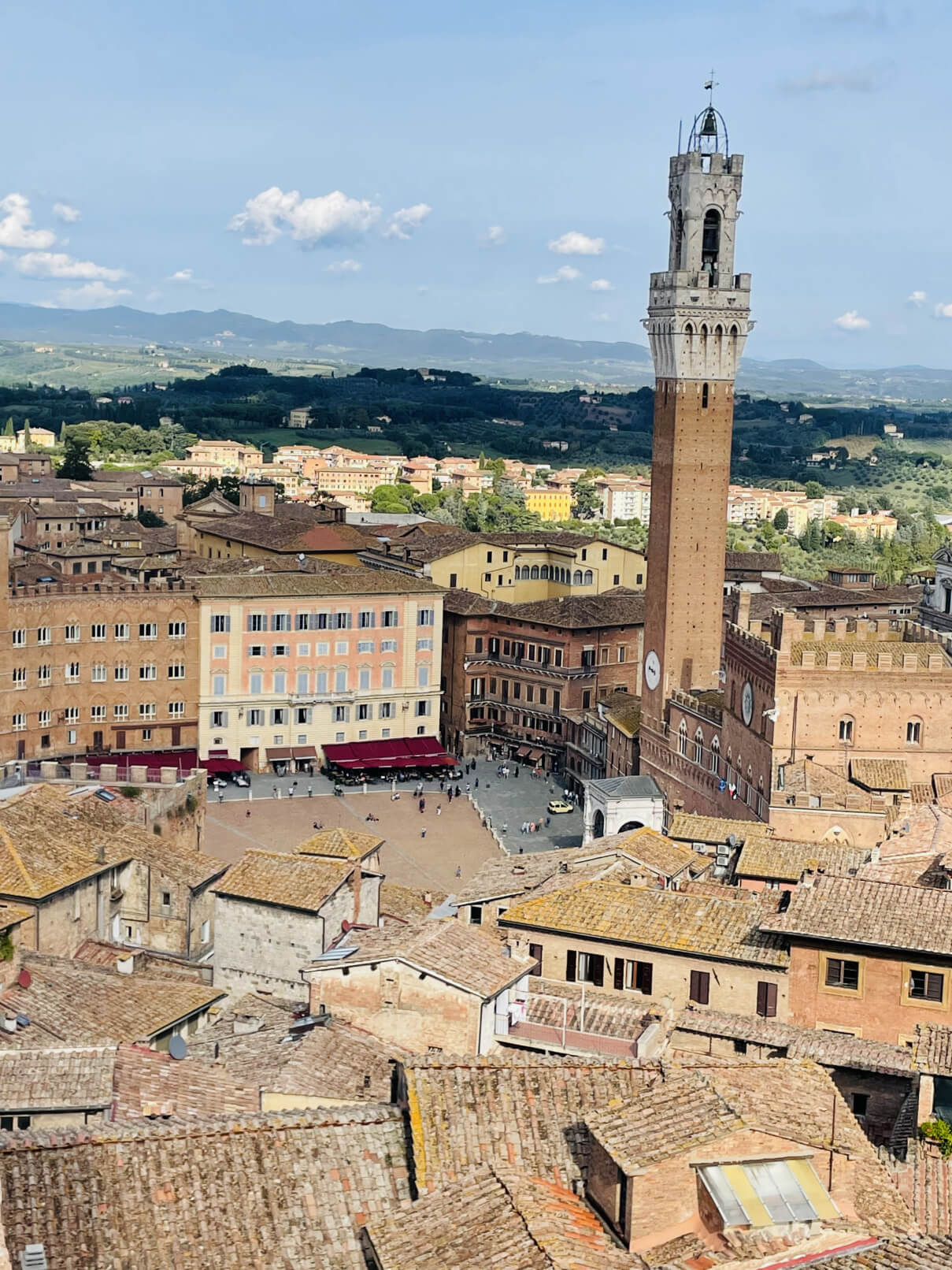
At the heart of Siena lies Piazza del Campo, a shell-shaped square unlike any other in Italy. Divided into nine segments symbolizing the Council of Nine—the government that guided Siena during its peak—it is dominated by the Palazzo Pubblico and its soaring Torre del Mangia. Twice a year, the square becomes the stage for the Palio di Siena, when the city’s 17 contrade compete in a fierce bareback horse race that lasts only seconds but shapes the life of Siena for weeks, embodying centuries of rivalry and pride.
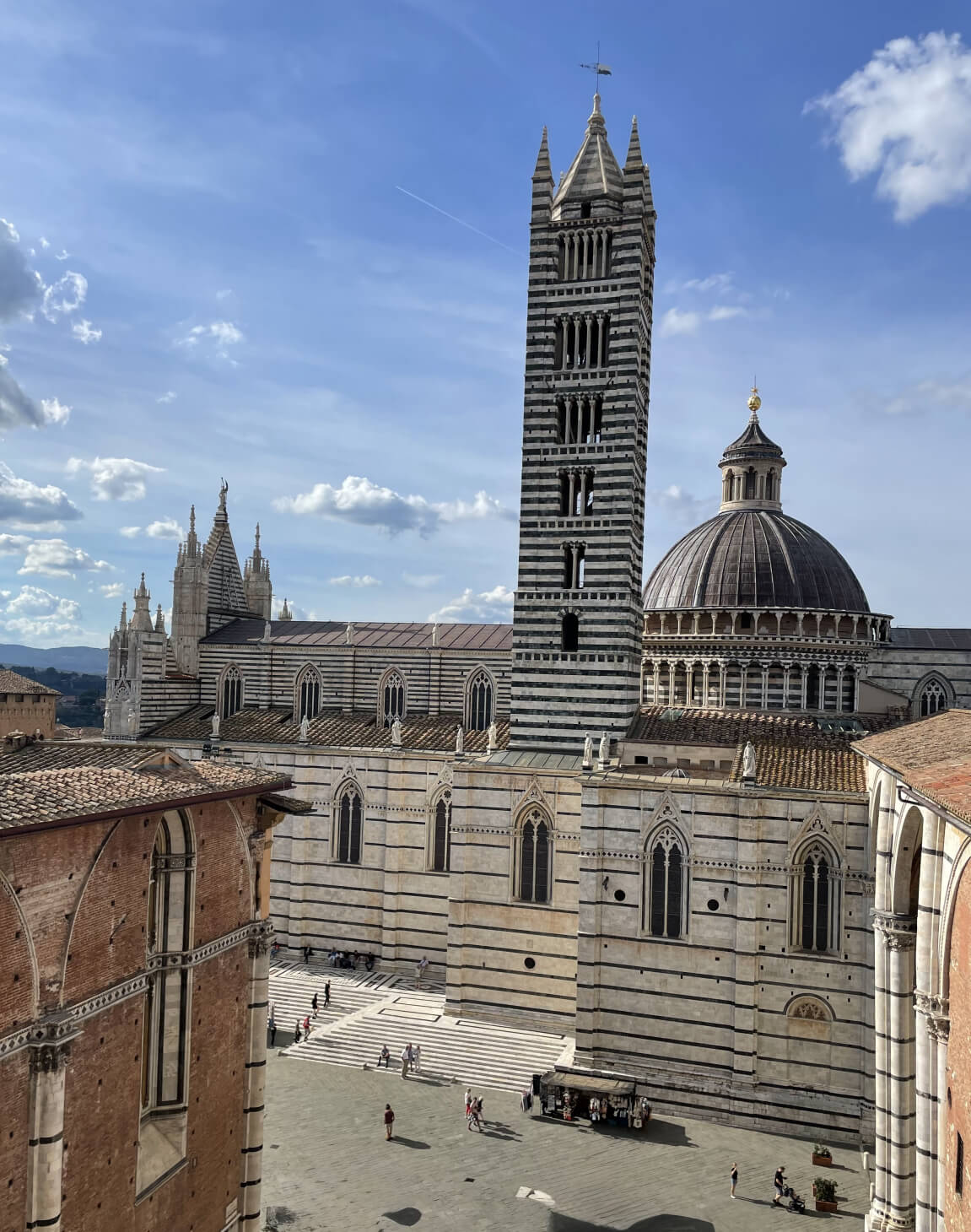
The city’s Duomo is another marvel. Its striking striped marble façade and richly decorated interior—home to works by Pisano, Donatello, and Michelangelo—make it one of Italy’s most beautiful cathedrals. The inlaid marble floor, uncovered only at certain times of the year, is considered a masterpiece of Renaissance art, as is the Piccolomini Library, adorned with frescoes painted with the help of a young Raphael.
By the early 14th century, Siena considered its cathedral—already magnificent—too small and began work on the ambitious “Duomo Nuovo” (New Cathedral). The plan was breathtaking: the existing church would serve only as the transept of a vast new basilica. But in 1348 the Black Death swept through Siena, killing much of its population and halting construction. Today visitors can still climb the remains of the Facciatone, the giant unfinished façade, for panoramic views of the city.
No wonder Siena is a UNESCO World Heritage Site, celebrated for its perfectly preserved medieval cityscape and vibrant cultural life.