The Village Where Water Tells Stories
This village is unlike any other. With a population of barely 30, it may seem just a dot on the map, yet it sits atop a natural hot spring that has attracted visitors for centuries. The healing properties of the waters were first discovered by the Etruscans, embraced by the Romans, and later sought by medieval pilgrims along the Via Francigena—as well as by famous figures such as Pope Pius II and Saint Catherine of Siena or Lorenzo the Magnificent.
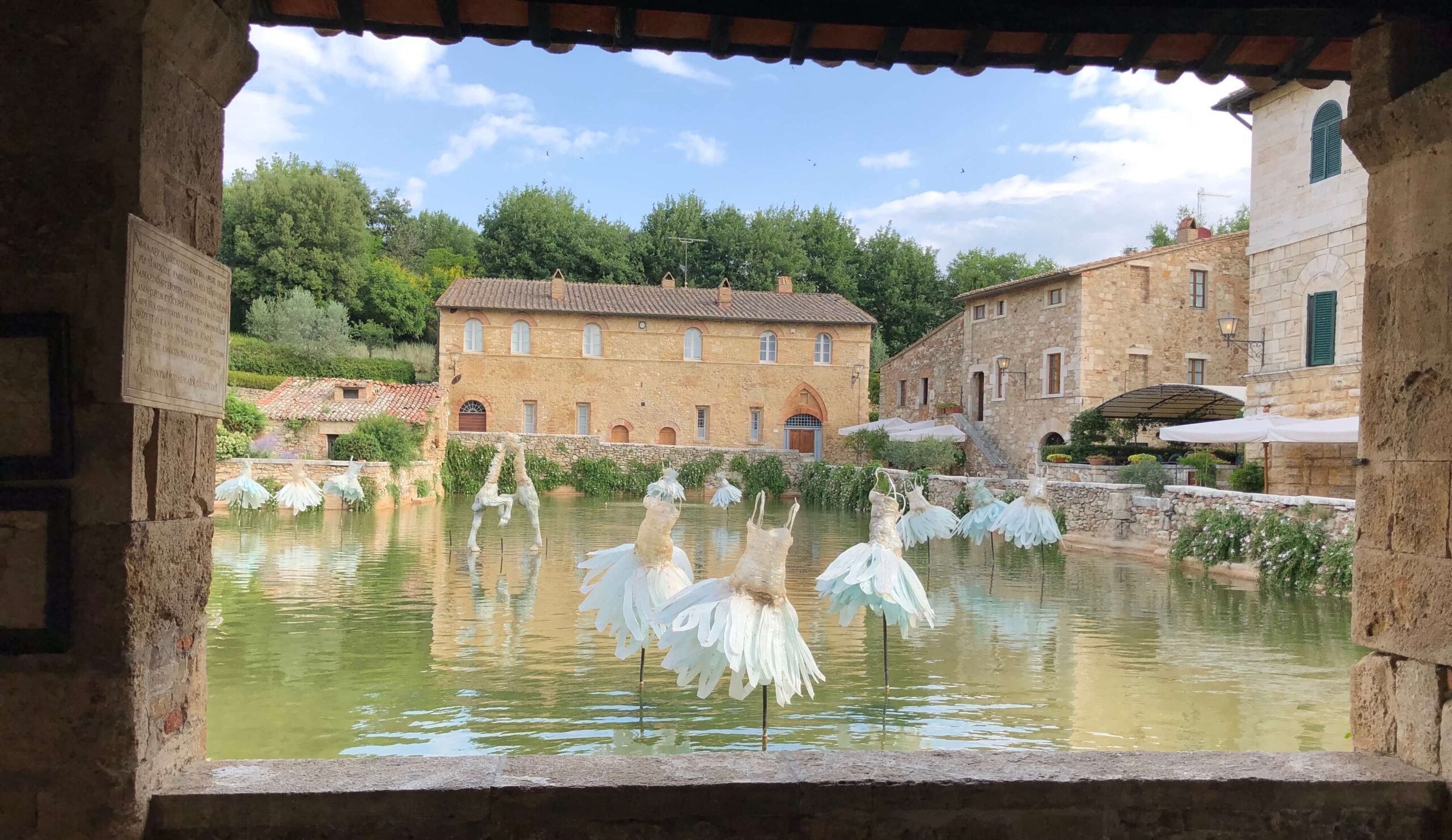
Sightseeing here is equally striking. The main square, Piazza delle Sorgenti (the “Square of Sources”), is in fact a vast 16th-century pool, 49 meters long and 29 meters wide, filled with volcanic water that remains at a constant 50°C. Around it, the medieval village and stone buildings have remained largely unchanged despite centuries of conflict, transporting visitors back in time. Just outside the walls, a short walk from the piazza, lies the Parco dei Mulini, once home to numerous mills powered by the hot spring.
It’s no wonder the village has inspired filmmakers, including Carlo Verdone in Al lupo al lupo, who captured its timeless, suspended atmosphere.
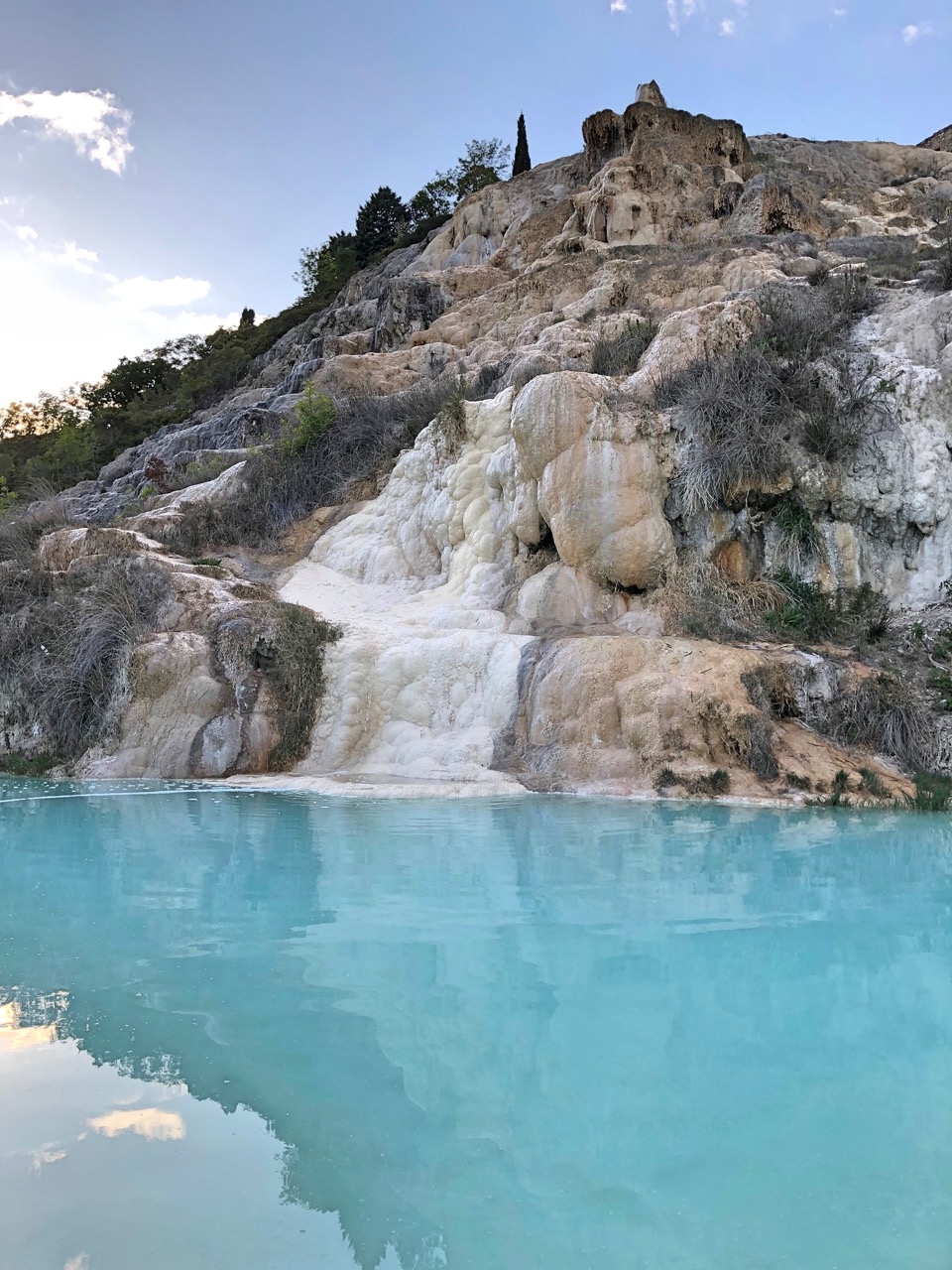
Bathing in the historic pool is no longer permitted, but you can still enjoy the thermal waters—either in local spas or, more simply (and freely), in the natural pools and small waterfalls of the Parco dei Mulini, fed by the same volcanic spring. Just bring a towel and an old swimsuit, and as you relax in the warm, misty pools, it’s easy to imagine why this spot was once a cherished stop for weary pilgrims on the Via Francigena.